How to Calculate Macros for Building Muscle or Losing Fat
Calories get all the attention, but macros are where the magic happens. Learn how to calculate your protein, carb, and fat needs for your specific fitness goal.
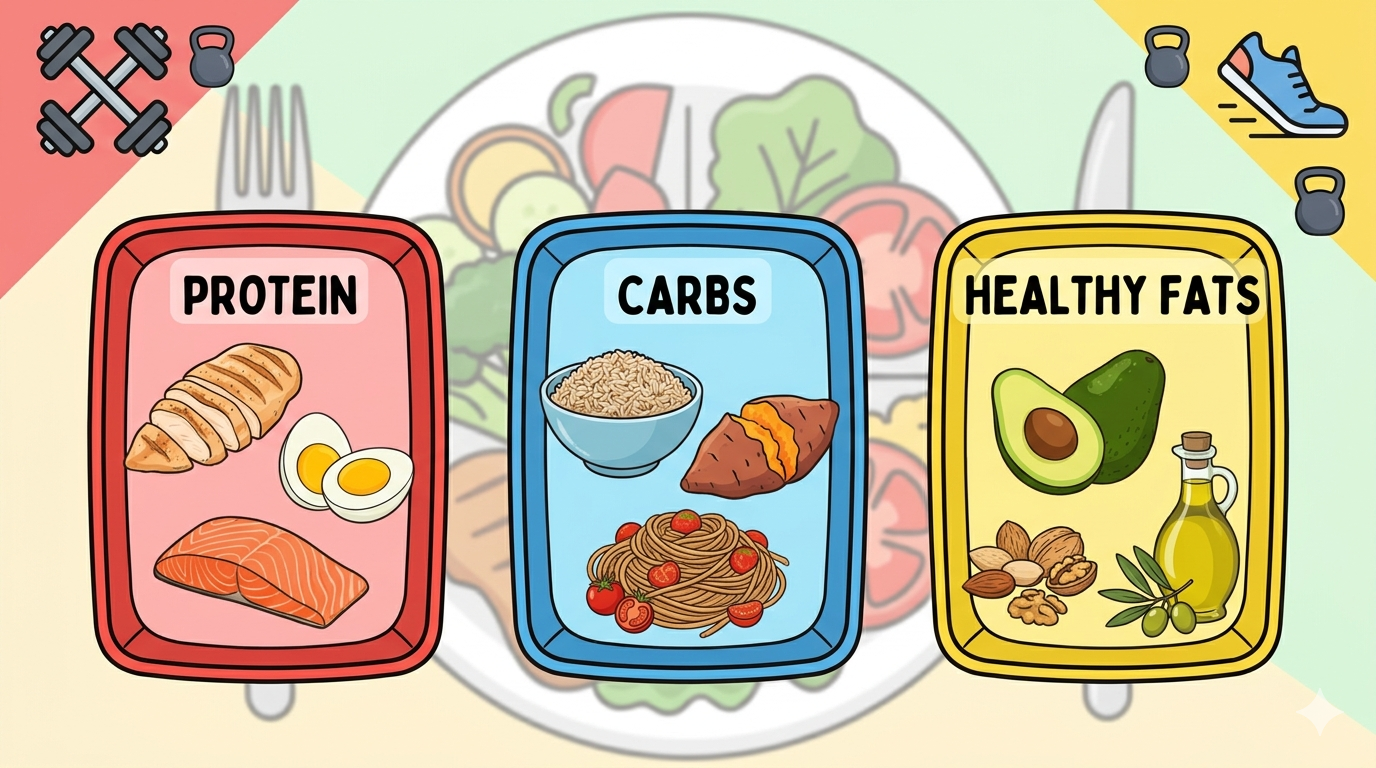
What Are Macros?
Macronutrients are the three energy-providing nutrients your body needs in large amounts:
- Protein: 4 calories per gram. Builds and repairs muscle, supports immune function.
- Carbohydrates: 4 calories per gram. Primary energy source for workouts and brain function.
- Fat: 9 calories per gram. Hormones, brain health, vitamin absorption.
Step 1: Calculate Your Calorie Needs
First, figure out your daily calorie target. Use our calorie calculator or estimate:
- Maintenance calories = Current weight × 15 (moderately active)
- To lose weight: Subtract 300-500 calories
- To gain muscle: Add 200-300 calories
Step 2: Determine Your Protein
Protein is the most important macro, especially for fitness goals. Recommendations:
- General fitness: 0.8-1g per pound of body weight
- Building muscle: 1-1.2g per pound
- Losing fat (preserving muscle): 1.2-1.5g per pound
Example: 180 lb man building muscle = 180-216g protein daily
Step 3: Determine Your Fat
Aim for 0.3-0.4g per pound of body weight, or 25-30% of total calories. Don't go below 20% - fat is essential for hormone production.
Step 4: Fill in Carbs
Carbs are your remaining calories after protein and fat are set:
Total Calories - (Protein × 4) - (Fat × 9) = Calories for Carbs
Carbs ÷ 4 = Grams of Carbs
Sample Macro Split for 2,000 Calories
- Scenario: 180 lb man, building muscle
- Protein: 180g (720 calories)
- Fat: 65g (585 calories)
- Carbs: 174g (695 calories)
Macro Ratios by Goal
- Fat Loss: 40% protein, 35% carbs, 25% fat
- Maintenance: 30% protein, 40% carbs, 30% fat
- Muscle Gain: 35% protein, 45% carbs, 20% fat
- Keto: 25% protein, 5% carbs, 70% fat
💡 Pro Tip
Focus on protein first - hit this target every day. Carbs and fats are more flexible. Use our macro calculator to get personalized numbers instantly.
Tracking Your Macros
Use apps like MyFitnessPal, Cronometer, or Simple to track. Weigh food initially - portions are often larger than expected. After a few weeks, you'll eye-ball portions accurately.