How to Calculate Calories for Weight Loss: The Science
Weight loss comes down to a simple equation: calories in versus calories out. But knowing exactly how many calories you need is the key to sustainable weight loss.
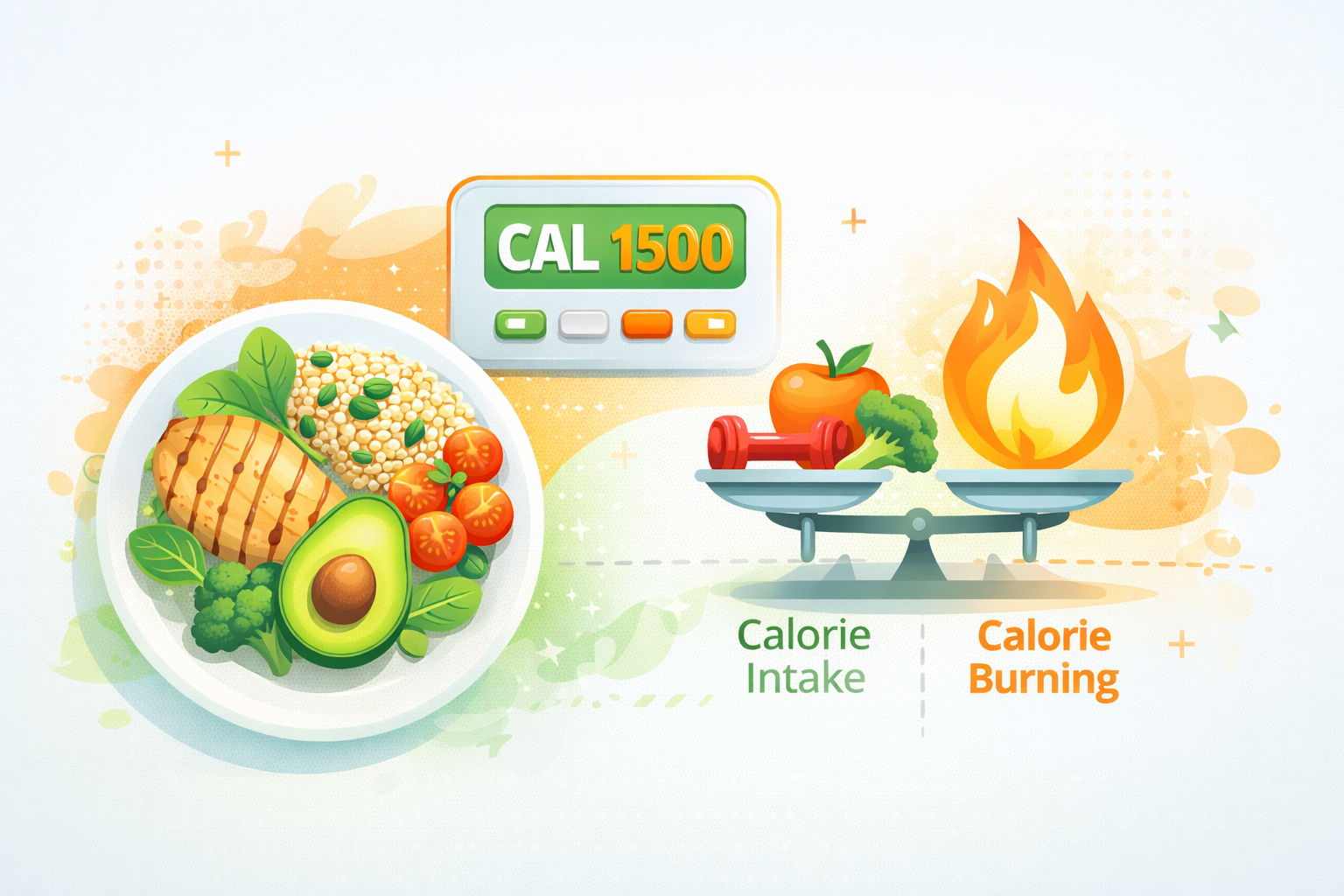
The Calorie Balance Equation
Your body weight is a stored form of energy. To lose weight, you must use more calories than you consume. This creates a "calorie deficit" that forces your body to burn stored fat for energy.
- 1 pound of fat = 3,500 calories
- To lose 1 pound per week: create a 500-calorie daily deficit
- To lose 2 pounds per week: create a 1,000-calorie daily deficit
Step 1: Calculate Your BMR (Basal Metabolic Rate)
Your BMR is the calories your body burns just to stay alive - breathing, heartbeat, cell production. This accounts for 60-70% of your daily calorie burn.
Mifflin-St Jeor Equation (most accurate):
Men: BMR = (10 × weight in kg) + (6.25 × height in cm) - (5 × age) + 5
Women: BMR = (10 × weight in kg) + (6.25 × height in cm) - (5 × age) - 161
Step 2: Calculate Your TDEE (Total Daily Energy Expenditure)
Your TDEE is your BMR plus your activity level. Use this multiplier:
- Sedentary (desk job): BMR × 1.2
- Lightly active (1-3 days exercise): BMR × 1.375
- Moderately active (3-5 days exercise): BMR × 1.55
- Very active (6-7 days exercise): BMR × 1.725
- Extra active (physical job + training): BMR × 1.9
Example: Sarah's Calculation
- Sarah: 35 years old, 150 lbs, 5'6", moderately active
- BMR: About 1,450 calories
- TDEE: 1,450 × 1.55 = 2,248 calories
- For 1 lb/week loss: 2,248 - 500 = 1,748 calories/day
Safe Calorie Ranges
Never go below these minimums without medical supervision:
- Men: 1,500 calories/day minimum
- Women: 1,200 calories/day minimum
Eating below these can slow metabolism, cause nutrient deficiencies, and lead to muscle loss.
Track Your Progress
Use our calorie calculator to find your target, then:
- Weigh yourself weekly (same time, same clothes)
- Adjust calories if weight loss stalls
- Recalculate every 10-15 pounds lost
💡 Pro Tip
Don't skip meals! Eating smaller portions more frequently keeps your metabolism active. Use our macro calculator to balance protein, carbs, and fats for sustainable weight loss.
Beyond Calories: Quality Matters
While calorie quantity matters, food quality affects:
- Satiety (how full you feel)
- Energy levels
- Muscle preservation
- Overall health
Focus on whole foods: lean proteins, vegetables, fruits, whole grains, and healthy fats.