How to Calculate Body Fat Percentage: Methods That Actually Work
Body weight alone doesn't tell you much. Two people can weigh exactly the same and look completely different because one is carrying mostly muscle while the other carries mostly fat. Body fat percentage is the metric that actually matters.
Why Body Fat Percentage Matters More Than BMI
BMI gets all the attention in doctor's offices, but it has a serious flaw: it can't distinguish muscle from fat. A competitive powerlifter might register as "obese" on the BMI scale while a sedentary person of average weight could be carrying dangerously high levels of visceral fat.
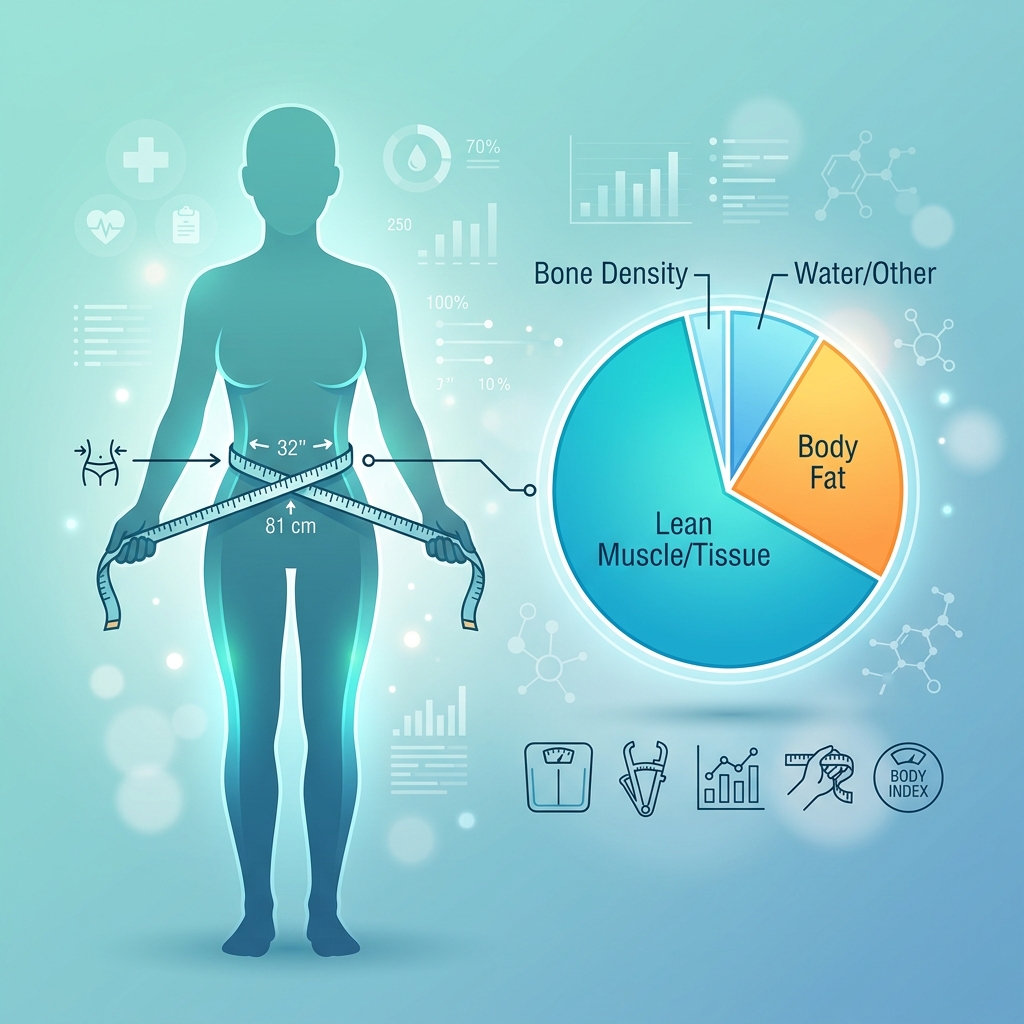
Body fat percentage tells you what fraction of your total body mass is fat tissue. The rest — bones, organs, blood, and muscle — is called lean mass. This ratio is what actually determines your health risk and your physique.
The Three Best Methods to Calculate Body Fat at Home
1. The U.S. Navy Circumference Method
The Navy method was developed for the U.S. military and is one of the most accurate tape-measure approaches available. It requires only a soft measuring tape and about two minutes of your time.
For Men — what you need to measure:
- Neck circumference — measured just below the larynx
- Waist circumference — at the navel, not the narrowest point
- Height
For Women — what you need to measure:
- Neck circumference
- Waist circumference
- Hip circumference — at the widest point
- Height
The margin of error for the Navy method is typically ±3–4%, which is perfectly acceptable for tracking changes over time. You don't need exact precision — you need consistency.
2. Skinfold Calipers
Skinfold calipers pinch specific sites on your body and measure the thickness of the fat layer. The three-site Jackson-Pollock method is the most widely used:
- Men: chest, abdomen, thigh
- Women: tricep, suprailiac (hip), thigh
A decent pair of Accu-Measure calipers costs about $10 and gives readings accurate to within ±3.5% if you use them correctly. The biggest mistake people make is inconsistent pinch technique — always pinch about an inch away from the site, pull the fold away from the muscle, and take the reading two seconds after clamping.
3. Bioelectrical Impedance (BIA)
This is what most home scales with "body fat" readings use. A small electrical current passes through your body — fat tissue resists electricity more than muscle does, so the device estimates your composition based on resistance.
BIA is convenient but can swing wildly based on hydration. The same person can read 18% body fat in the morning and 22% at night depending on how much water they've consumed. Use it as a trend tracker, not a one-time measurement.
What Is a Healthy Body Fat Percentage?
These ranges come from the American Council on Exercise (ACE):
| Category | Women | Men |
|---|---|---|
| Essential Fat | 10–13% | 2–5% |
| Athletes | 14–20% | 6–13% |
| Fitness | 21–24% | 14–17% |
| Acceptable | 25–31% | 18–24% |
| Obese | 32%+ | 25%+ |
One thing worth knowing: women naturally carry more essential body fat than men due to hormonal and reproductive functions. A woman at 23% body fat is in great shape — that's equivalent health-wise to a man at around 15%.
A Real Example: Calculating Body Fat with the Navy Method
Say you're a 32-year-old man with the following measurements:
- Height: 5'10" (178 cm or 70 inches)
- Waist: 34 inches
- Neck: 15.5 inches
Plugging into the men's formula:
% Fat = 86.010 × log₁₀(34 − 15.5) − 70.041 × log₁₀(70) + 36.76
= 86.010 × log₁₀(18.5) − 70.041 × log₁₀(70) + 36.76
= 86.010 × 1.267 − 70.041 × 1.845 + 36.76
= 108.98 − 129.23 + 36.76
≈ 16.5% body fat (Fitness category)
💡 Pro Tip: Track the Trend, Not the Number
No at-home method is perfectly accurate. What matters is consistency — measure yourself the same way, at the same time of day, under the same conditions. A reading that drops from 24% to 21% over three months is meaningful regardless of absolute accuracy.
How to Lower Your Body Fat Percentage
The basic formula: create a calorie deficit while preserving as much muscle mass as possible. Here's what that looks like in practice:
- Eat enough protein: Aim for 0.7–1g per pound of body weight to protect muscle
- Lift weights: Resistance training maintains lean mass during a cut
- Moderate the deficit: A 300–500 calorie daily deficit leads to sustainable fat loss without excessive muscle loss
- Sleep 7–9 hours: Poor sleep elevates cortisol, which promotes fat storage
- Track progress monthly: Measure body fat every 4–6 weeks, not daily
Try Our Free Body Fat Calculator
Rather than doing the math manually every time, use our free body fat calculator. Enter your measurements and get your reading instantly using the Navy method. For a complete fitness picture, pair it with our BMR calculator to understand how many calories you burn at rest, and our macro calculator to fine-tune your nutrition.
Find Your Body Fat Percentage Now
Use our free calculator — enter your measurements and get your reading in seconds.
Go to Body Fat Calculator →