Healthy Weight Gain During Pregnancy: What the Guidelines Actually Say
"Eating for two" is one of the most persistent and potentially harmful myths in pregnancy nutrition. In reality, your recommended weight gain depends heavily on where you start — and the range matters more than most people realize.
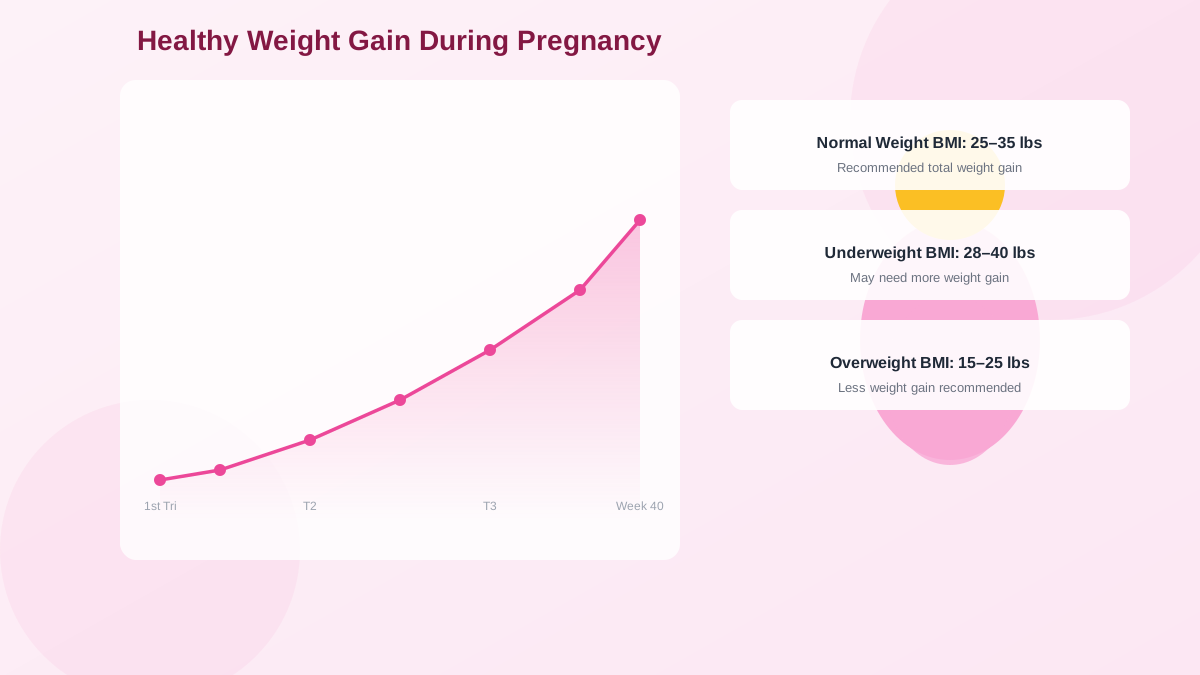
The IOM Guidelines: Recommended Pregnancy Weight Gain
The Institute of Medicine (IOM), part of the National Academies of Sciences, publishes evidence-based guidelines for gestational weight gain. Your recommended range is determined by your pre-pregnancy BMI:
| Pre-Pregnancy BMI | BMI Category | Recommended Total Gain | 2nd & 3rd Trimester Rate |
|---|---|---|---|
| Below 18.5 | Underweight | 28–40 lbs (12.7–18.1 kg) | ~1 lb/week |
| 18.5–24.9 | Normal Weight | 25–35 lbs (11.3–15.9 kg) | ~1 lb/week |
| 25.0–29.9 | Overweight | 15–25 lbs (6.8–11.3 kg) | ~0.6 lb/week |
| 30.0+ | Obese (any class) | 11–20 lbs (5.0–9.1 kg) | ~0.5 lb/week |
Twin Pregnancy: Different Rules Apply
If you're carrying twins, the guidelines are higher:
| Pre-Pregnancy BMI | Recommended Total Gain (Twins) |
|---|---|
| Normal weight | 37–54 lbs |
| Overweight | 31–50 lbs |
| Obese | 25–42 lbs |
Where Does the Weight Actually Go?
Many women are surprised to learn that much of the pregnancy weight doesn't come from fat stores. Here's a realistic breakdown for someone with a normal-BMI pregnancy gaining 30 pounds:
| Component | Approximate Weight |
|---|---|
| Baby | 7–8 lbs |
| Placenta | 1.5 lbs |
| Amniotic fluid | 2 lbs |
| Uterus (growth) | 2 lbs |
| Breast tissue | 2 lbs |
| Blood volume increase | 4 lbs |
| Body fluids | 4 lbs |
| Maternal fat stores | 7 lbs |
| Total | ~30 lbs |
The fat stores aren't just excess — they're functional. They help fuel breastfeeding after birth, which requires about 300–500 extra calories per day.
Trimester-by-Trimester Weight Gain Pattern
Weight gain isn't linear throughout pregnancy. A typical pattern for a normal-BMI woman:
- First trimester (weeks 1–13): 1–4.5 lbs total. Morning sickness often limits intake. Minimal gain is normal and expected.
- Second trimester (weeks 14–27): About 1 lb per week. This is when appetite typically returns and steady gain begins.
- Third trimester (weeks 28–40): About 1 lb per week. Baby grows most rapidly. Some women gain slightly faster.
Risks of Gaining Too Little
Insufficient gestational weight gain is underreported as a concern but carries real risks:
- Low birth weight (under 5.5 lbs)
- Preterm birth
- Fetal growth restriction
- Lower likelihood of successful breastfeeding
- Potentially longer recovery postpartum
Risks of Gaining Too Much
Excessive weight gain increases risk for:
- Gestational diabetes
- Preeclampsia (high blood pressure during pregnancy)
- C-section delivery
- Large for gestational age (LGA) baby — associated with birth complications
- Difficulty losing postpartum weight
- Increased obesity risk for the child long-term
💡 A Word of Reassurance
Weight during pregnancy fluctuates constantly — day to day and even hour to hour — due to fluid shifts, digestion, and sodium intake. Don't stress about daily weigh-ins. Track weekly at most, and always at the same time of day (first thing in the morning before eating is most consistent). The trend over weeks and months is what your provider watches.
How Many Extra Calories Do You Actually Need?
Contrary to "eating for two," the additional calorie needs are modest:
- First trimester: +0 to 100 extra calories/day (almost none)
- Second trimester: +340 extra calories/day
- Third trimester: +450 extra calories/day
450 calories is a small meal or a large snack — not a license to eat whatever you want. Quality matters enormously during pregnancy. Focus on protein, folate, iron, calcium, and DHA-rich foods.
Calculate Your Pregnancy Weight Gain Goal
Use our BMI calculator to find your pre-pregnancy BMI category, then reference the IOM guidelines above for your recommended range. For tracking your nutrition during pregnancy, our calorie calculator can help you estimate appropriate calorie targets by trimester.
Calculate Your Pre-Pregnancy BMI
Find which IOM weight gain category applies to your pregnancy.
Go to BMI Calculator →